Invertebrates
Invertebrates do not have a backbone and have multiple, complex life stages that involve metamorphosis from larvae to adult. The invertebrates of the Elan Valley Estate are well recorded, and the diversity of species continue to provide surprises to those that take the time to look.
Most invertebrate species are small and quite easily over-looked. Some are more easily seen than others although identification is not always that easy.
These pages cover only a small number of the species that have been found here. It is not a fully comprehensive list and not all invertebrate groups have been included.
The Elan Links Natural Heritage team have been monitoring, restoring and enhancing the natural habitats. These aim to tackle the threats and challenges to the areas natural heritage, preserving and maintaining it for the future.
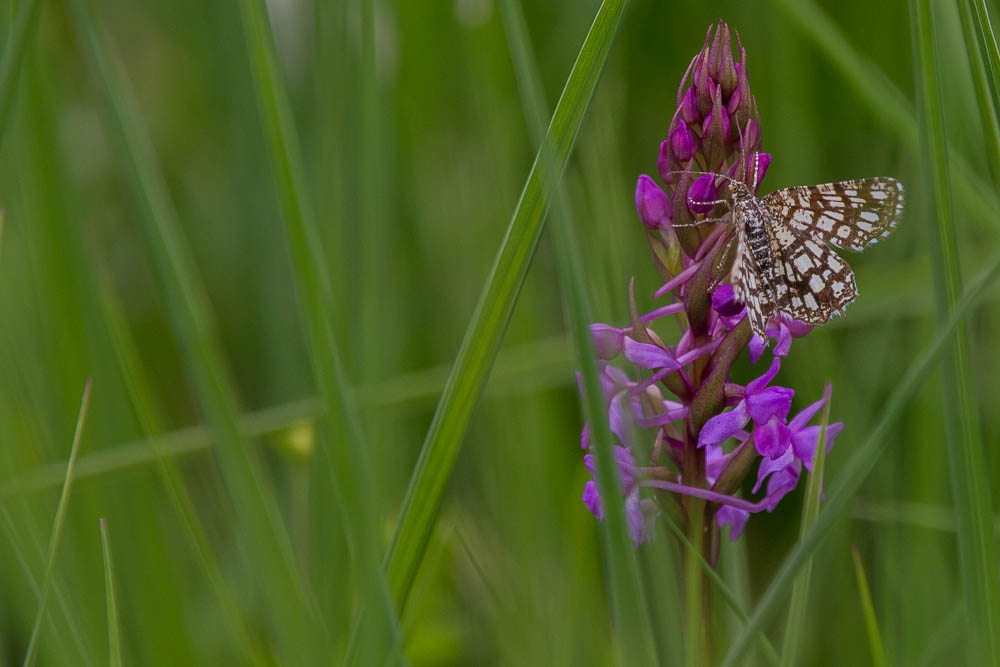
Thirty-one species of butterfly have been recorded on the Estate.
Many of our butterfly species are declining, even species that were once common and widespread and this makes it more important than ever to know what is present so that measures can be taken to maintain suitable habitat for them.
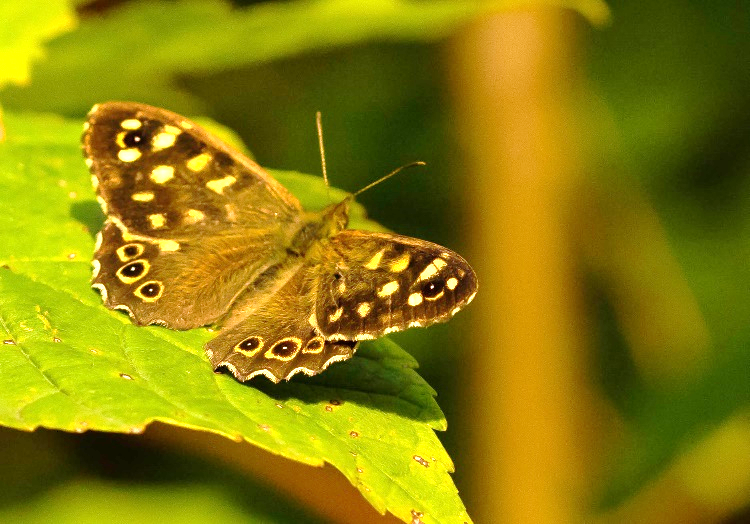
Common species such as the Speckled Wood butterfly can usually be seen flitting along the woodland glades throughout the summer months. Ringlet, Meadow Brown and both the Large, Small and Green Veined White have all been recorded.
One of the more specialist species is the Small Pearl-bordered Fritillary that can be found where there are Violets especially Dog Violet. This is the foodplant upon which the caterpillar feeds and hence this fritillary will lay its eggs. This is listed as a Section 42 species of Principal Importance under the NERC Act in Wales as it is a declining species.
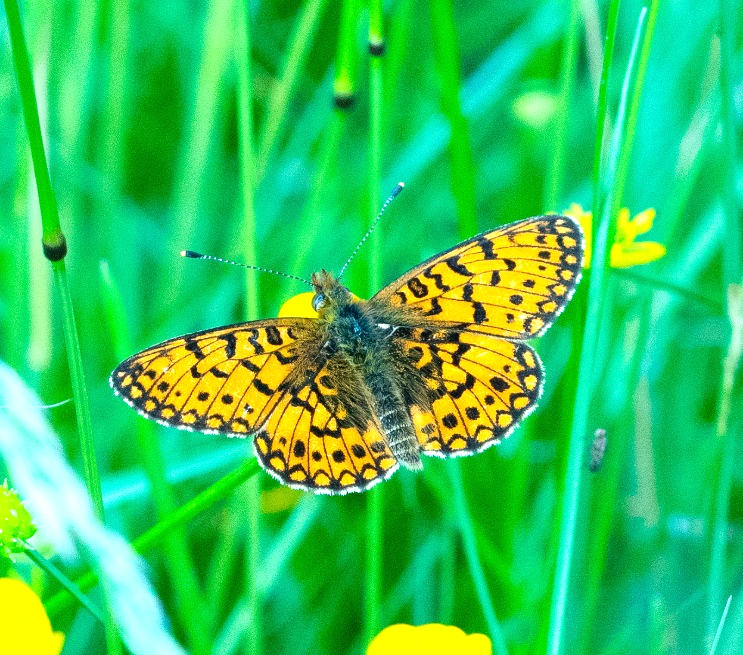
Their populations are decreasing overall in Britain, although Small Pearl-bordered Fritillary can still be found in habitat of damp grassland, woodland glades and marshy uplands. They are still recorded in those areas in the Elan Valley.
Dark Green Fritillary are one of the most widespread fritillary species in the UK and has been recorded on the Estate. They are generally found on open ground, preferring the ffridd habitat of the hillsides. The Silver Washed Fritillary is occasionally recorded in the wooded glades of the Estate and is a fast and strong flying species.
Two species that can be seen at times basking around the stony areas and gravel paths, are the Grayling and Wall butterflies. Both are listed as Section 42 species of Principal Importance under the NERC Act in Wales. Their numbers unfortunately continue to decline.
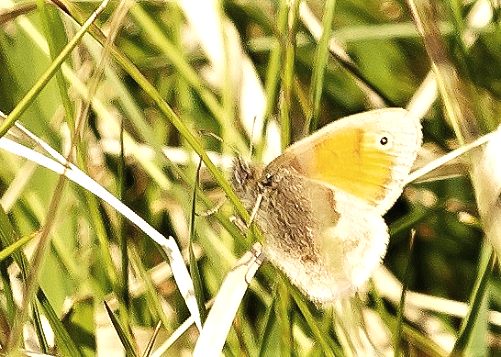
The Small and Large Heath butterflies are specialists of open grassland and the Small Heath can be seen in late summer along the sides of the cycle track as well as on the open hill.
The Purple Hairstreak butterfly is a species that has been recorded in the tops of the oak trees in the woodland of the Elan Valley. It is on the wing in June and July and is generally difficult to see due its habit of flying in the canopy of the oak woodlands.
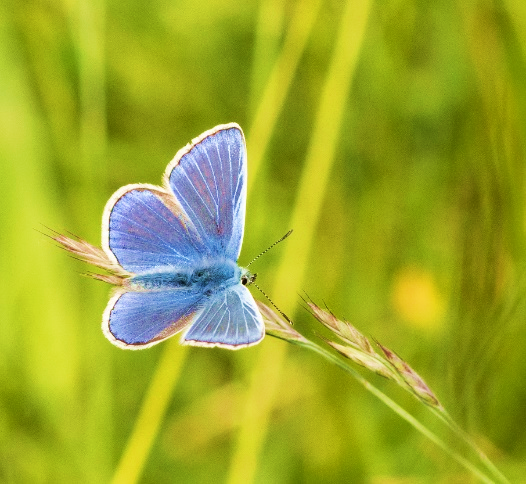
The Common Blue butterfly is also a grassland species and can often be seen flitting around on the grass stems beside the cycle track on warm days. The male is pale blue whilst the female is brown on top of its wings.
In early spring and again in the autumn months, the Comma butterfly will be on the wing and is distinctive with its ‘cut out’ patterning to the wing. This is a butterfly of woodland edge and remains one of our more frequently recorded species.
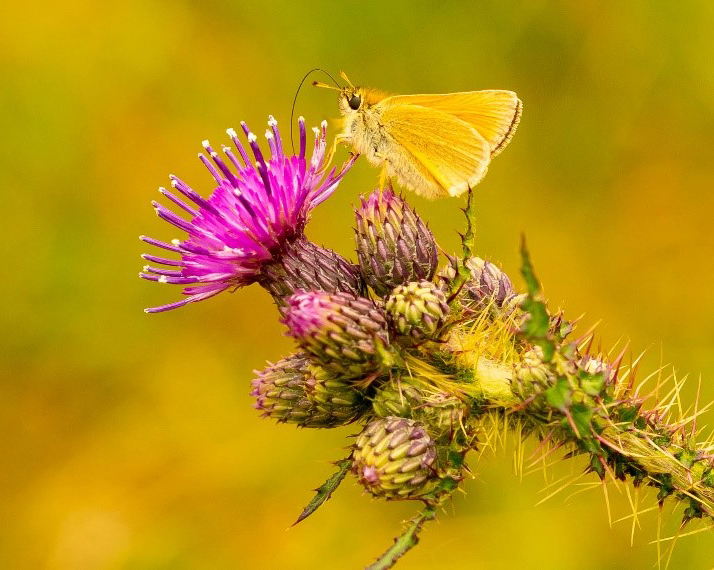
The Large and Small Skipper have been recorded on the Estate and are mainly seen on grass stems although they are associated with late summer flowers as depicted on this Knapweed flower.
Twenty species of Dragonflies and Damselflies have been recorded on the Estate to date.
The large yellow and black Golden-ringed dragonfly is often seen buzzing over still and moving water in late summer. Another species that can be seen later in the year is the Southern Hawker which will often do a ‘fly past’ and then may zoom right up and appear to have a look at you.
The Nationally Scarce, Scarce Blue-tailed Damselfly was recorded on the Estate in 1989 and although not recorded here since, it has recently increased its range and is worth looking out for in the future.
The White legged Damselfly is classed as Uncommon but has been spotted and recorded here. Found in slow-moving ditches and streams, the male uses its white legs in a fluttering display in front of the female and is the only Damselfly to have these white legs, making it unique to look at.
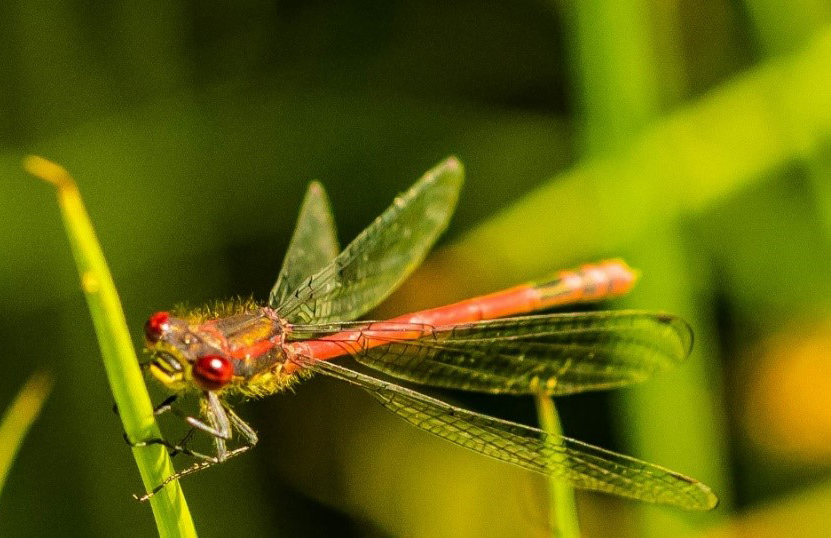
The Large Red damselfly can be seen hovering around still water, as it hunts for somewhere to lay its eggs in the vegetation. This is a commonly recorded species and is easily confused with the Small Red which is classed as Rare and is restricted to the heathlands of southern England and west Wales.
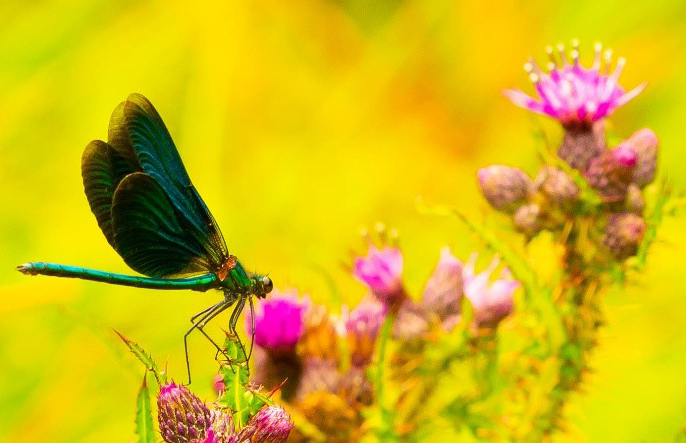
The Beautiful and Banded Damoiselle have both been recorded here. They are creatures of slow-moving streams and ditches.
There are many species of invertebrate that can be classed as pollinators and bees are some of the most effective.
.

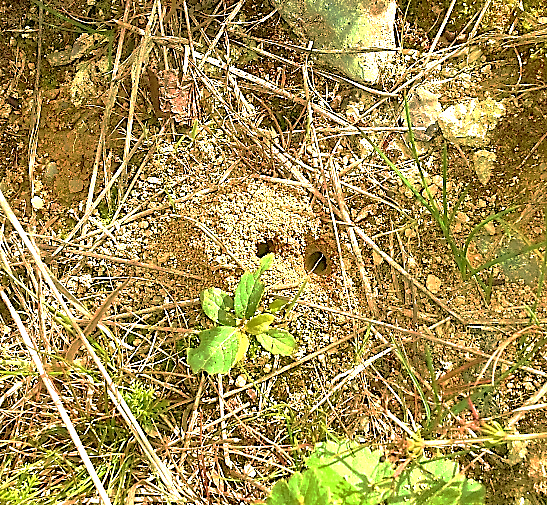
There are 269 species of bees in the British Isles and over 40 have been recorded in the Elan and Claerwen Valleys. Some of the bees recorded can be found in the upland hay meadows on the Estate as they are flower rich in the summer. However, many of our bee species will also use the heather clad upland areas and hillsides as a nectar and pollen source and can carry out their lifecycle in the soil of the hills and tracks.
Many bees and wasps are important pollinators and most of these are solitary species and do not exist in colonies like bumblebees or social wasps. Their life cycle involves creating a nest site in the ground or a hollow stem, laying and provisioning this cell with pollen or if it is a wasp, another insect for the hatched larvae to feed upon.
.
Some of the 40 species recorded here are protected by legislation as they are classed as Section 42 Species of Principle Importance and some are included in the Red Data Book of rare and endangered insects. These bees have niches that require a particular habitat and the Elan Valley upland meadows can provide that special habitat where some species of rare and rather specialist plants occur.
Some species of bee are so specialist that they will depend upon one type of flower structure to gather pollen from. They feed upon these flowers for nectar. Others will use many types of flower structure and these are usually more commonly recorded species.
.
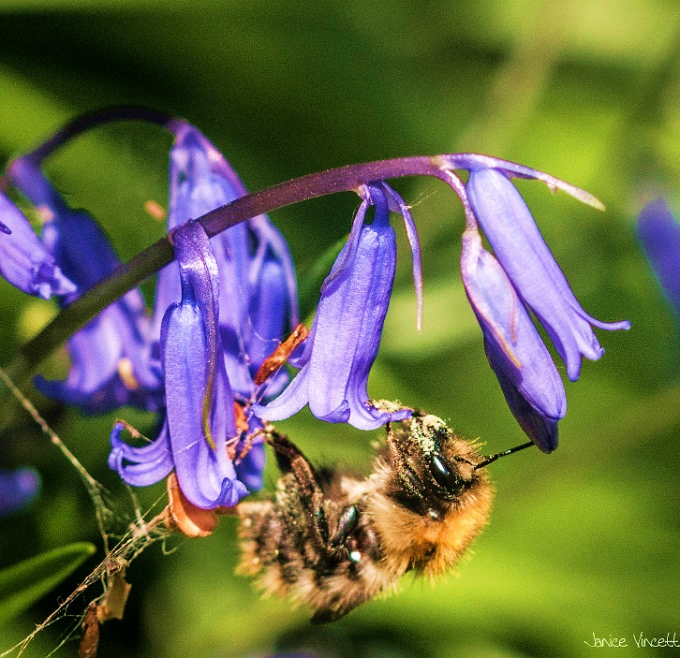
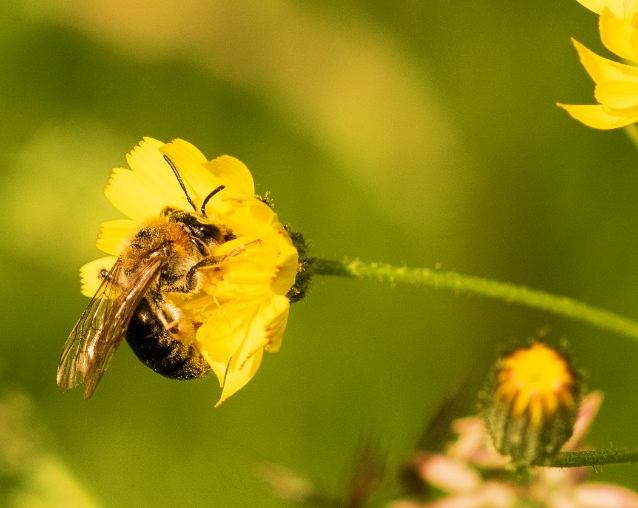
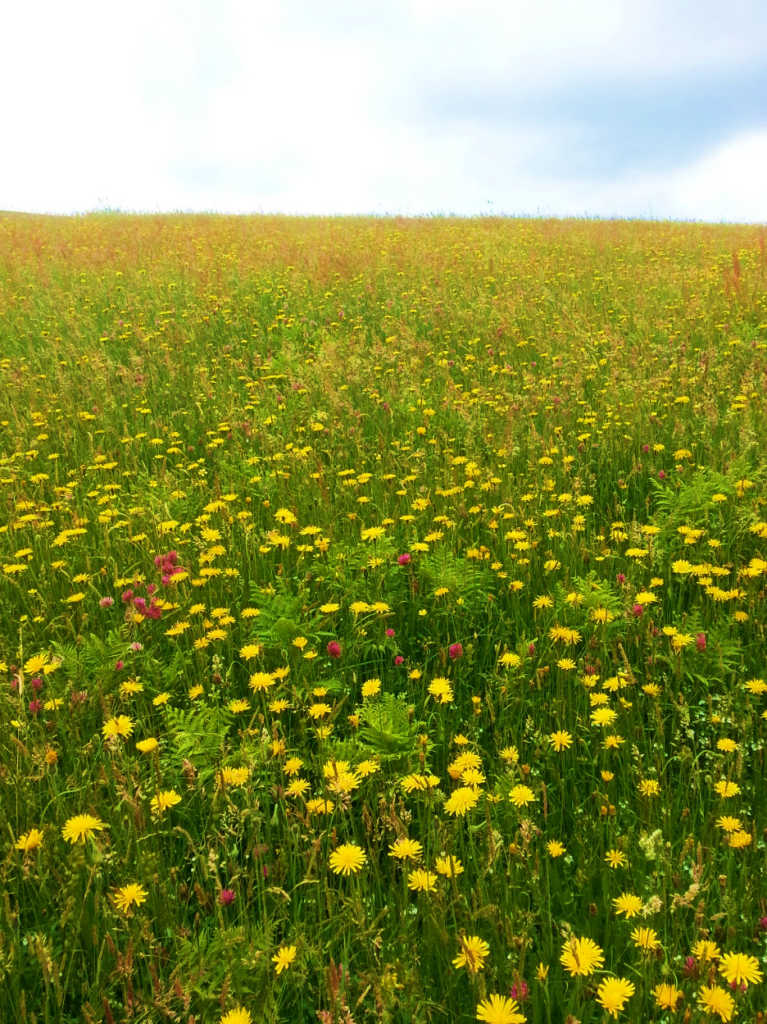
The meadows are grazed to maintain their condition and are Sites of Special Scientific Interest. The resultant hay is treated as a crop each year and gathered in to feed the animals over the winter period.
At one time, traditionally managed hay meadows were found across Britain, however, since 1946 there has been a 98% decrease in meadow land in the UK. This has had a detrimental effect upon our pollinating insects as some species rely particularly upon certain species of flowering plant.
.
It is the specialist bee species which need a certain flower structure or even a flower species that is the most threatened. Many have declined in the countryside as they require plants which grow in meadows to survive. This makes the Elan Valley meadows highly important to these valuable insects.
.
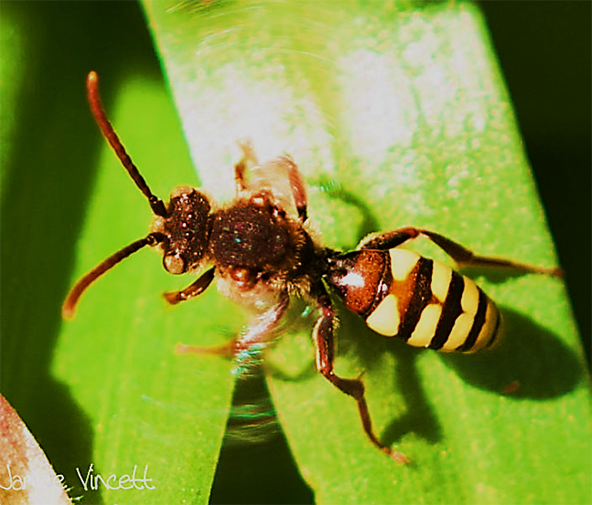
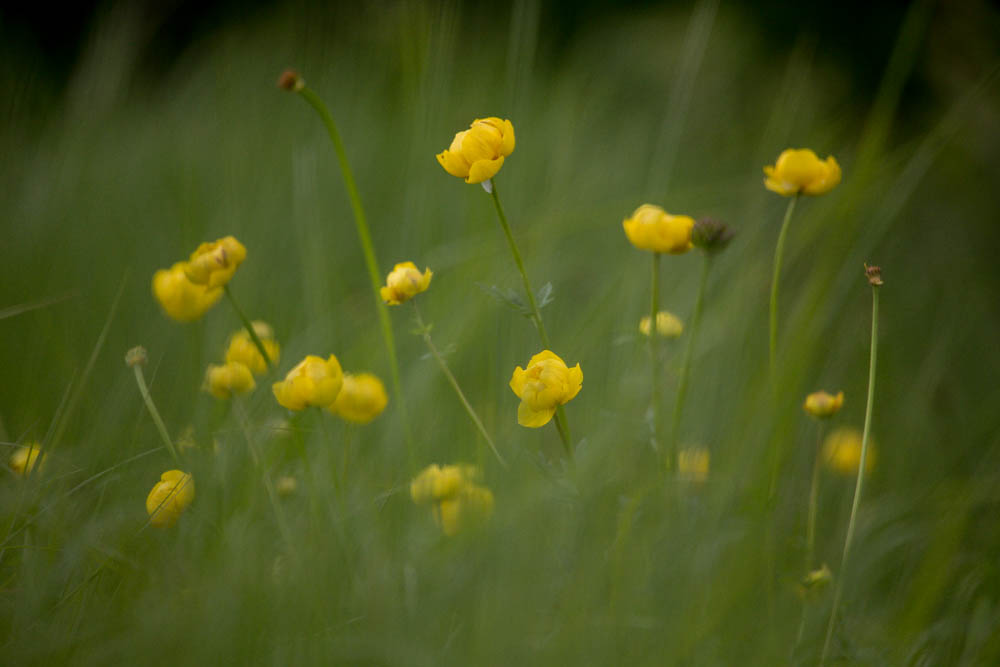
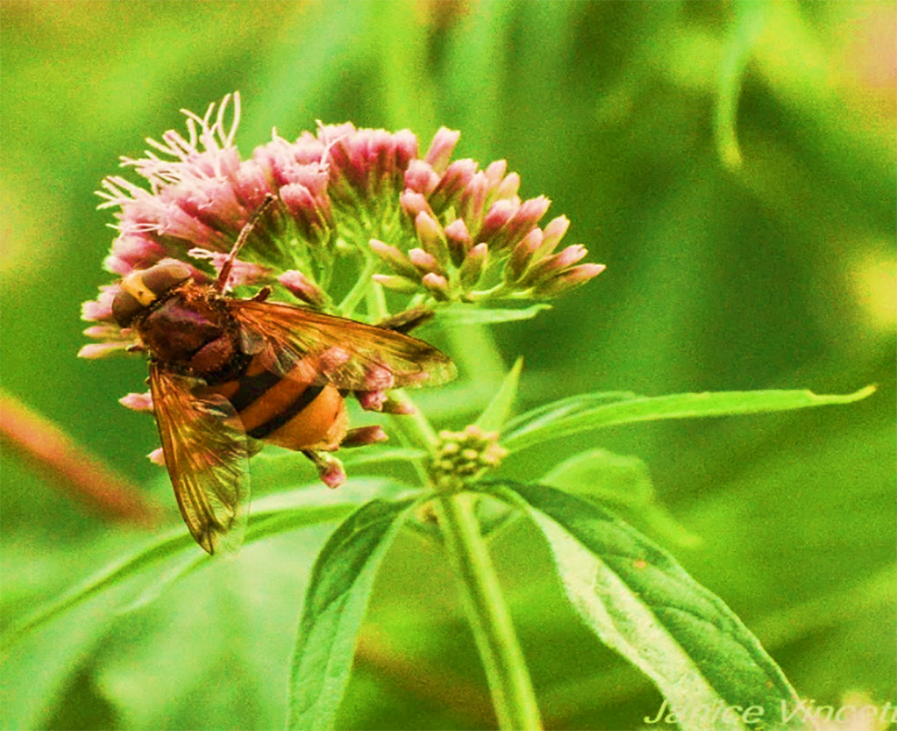
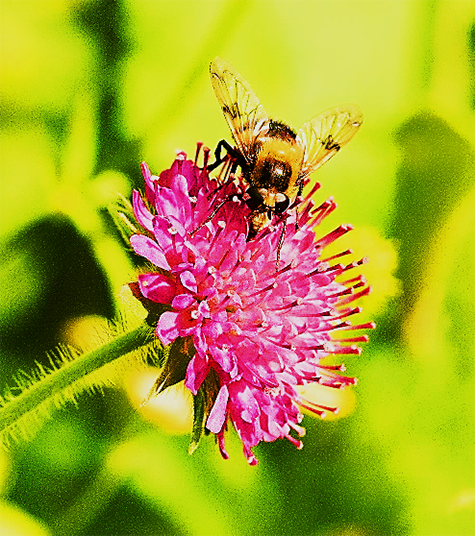
There are 7,000 species of fly in the UK and they are also important pollinators of plants. Some species will mimic bees and wasps in their colouring which helps them with protection as one of the species of hoverfly below mimics a hornet and the other one mimics a bumblebee. Some species of fly are specifically responsible for pollinating the Globe flower which is found in the hay meadows on the Estate. Greater butterfly Orchid also grow here, and some species of night flying moth have been found to pollinate them.
There is plenty of water in the Elan and Claerwen Valleys and many fresh water invertebrates have been recorded here. Mayflies, Caddis flies and Stoneflies are prevalent in the fast-flowing rivers and streams as well as the ponds and still waters. As well as flies, ants also are useful pollinators and 7 species have been recorded here to date.
Common species such as Yellow Meadow ant and Wood ant have been found as well as the Hairy Wood ant. As their names suggest, the wood ants colonise woodland, both coniferous and deciduous, and large nests can be found.
The Yellow Meadow ant is a species of undisturbed grassland and meadows and their nesting mounds can be seen in the meadows throughout the year. It is one of our most common ant species in the UK.
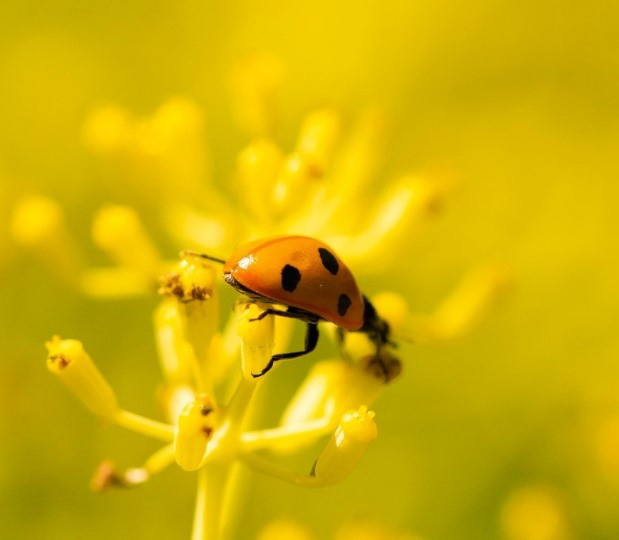
The Order of the Coleoptera is the largest of the insects. There are 4, 072 species of beetle in the UK and over recent years, 400 species have been recorded on the Estate. One exciting discovery on the Estate was the 5 Spot Ladybird. It is an Endangered species of river shingle, overwintering on gorse or under the shingle stones.
Another interesting species that has been recorded here is the Climbing Corydalis Weevil which is associated with the Climbing Corydalis plant and bracken stands. This is a tiny animal, measuring approximately 4mm in length. It is thought that the larvae feed upon the bracken rhizomes and the adults feed upon the Corydalis plant. It was once only found in the UK but has also been recorded in Europe.
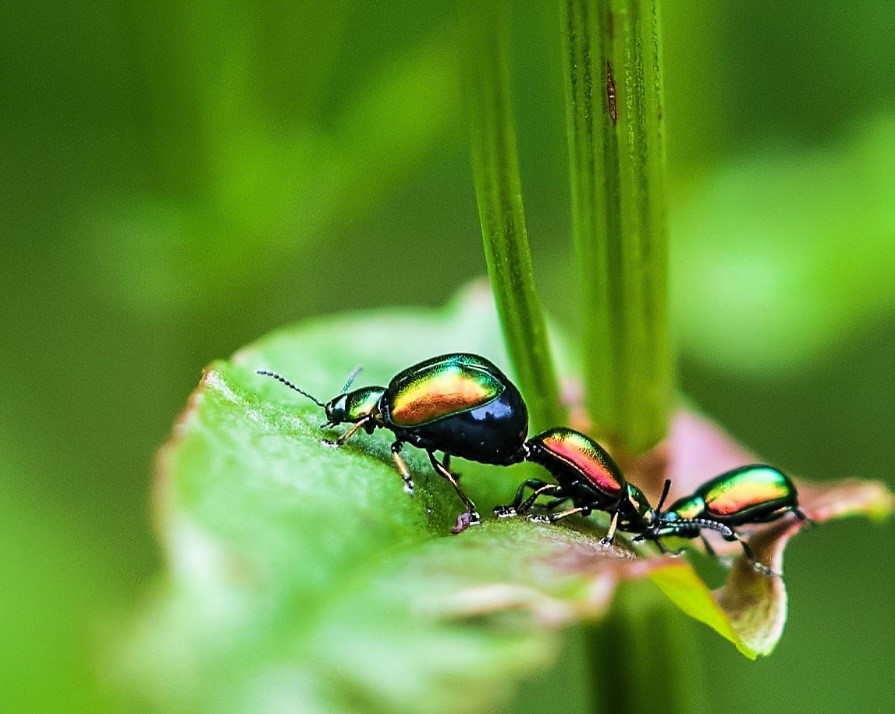
Beetles can be found in most habitats and certain species will inhabit different niches. Beetles are very varied in size and shape and can be most extraordinary in their appearance. Some of the most common are the leaf beetles such as the Green Dock Beetle.
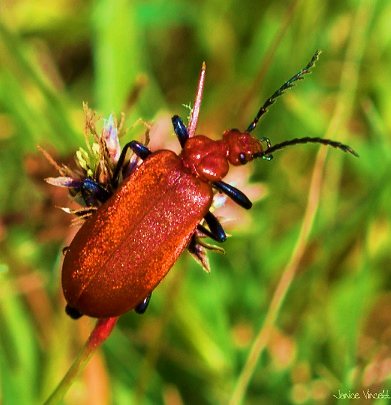
The Cardinal Beetles are species of woodland and can be found beneath the loose bark of rotting trees. Another group of beetles, the long horned, are also found in the woodlands. Their larvae will bore into soft rotting wood. These are known as a saproxylic species and can depend upon decaying wood for all or part of their life cycle.
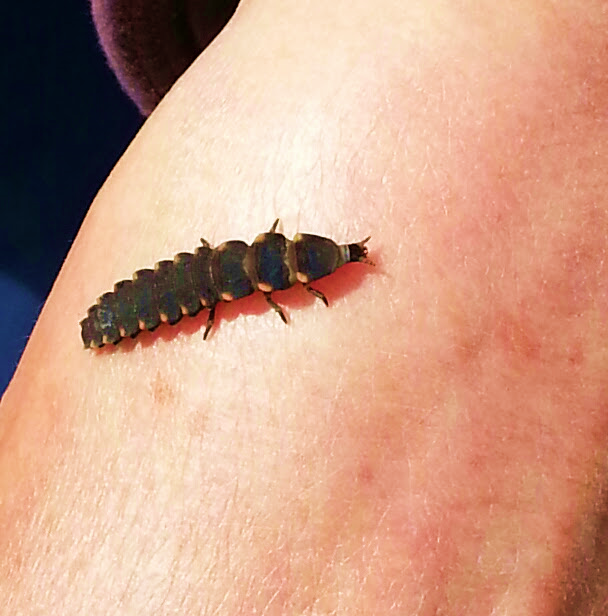
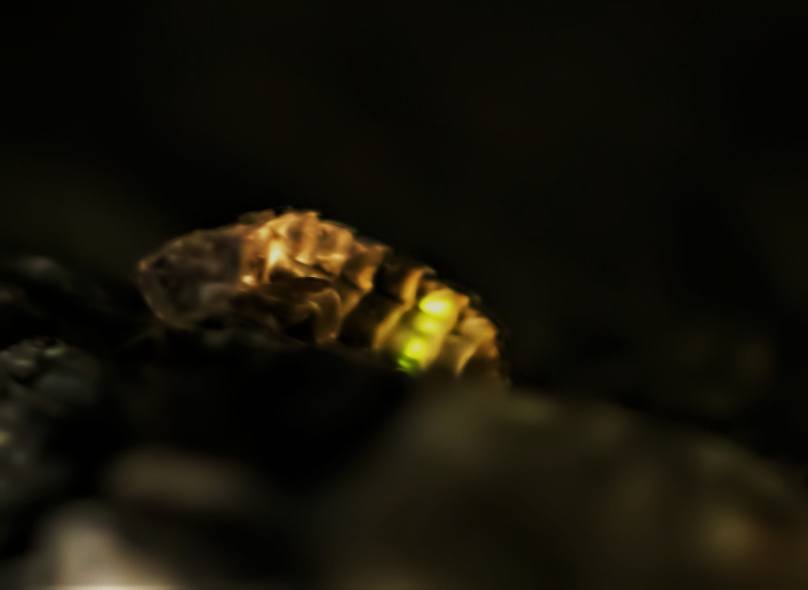
There are a reasonable number of Glow Worms recorded here each year. Despite their name these are also beetles and not worms. The females are flightless and can be seen on a dry night, clinging to a stem of grass, glowing from her back end. This is an advert to the male, which can fly, to mate with her. They can be found most easily in the months of June and July.
Their whole life cycle will take place in the area of grassland in which they pupate and so the population may naturally increase over time around that same area.
The Glow Worm is found in chalk and limestone grassland, and feeds upon snails and slugs. They are also distributed in farmland, woodland rides and along railway lines.
Interestingly, they are found mostly along the old railway line footpaths of the Estate and it is thought that they may have been ‘brought in’ on stone that was used when the railway line was constructed over 100 years ago.
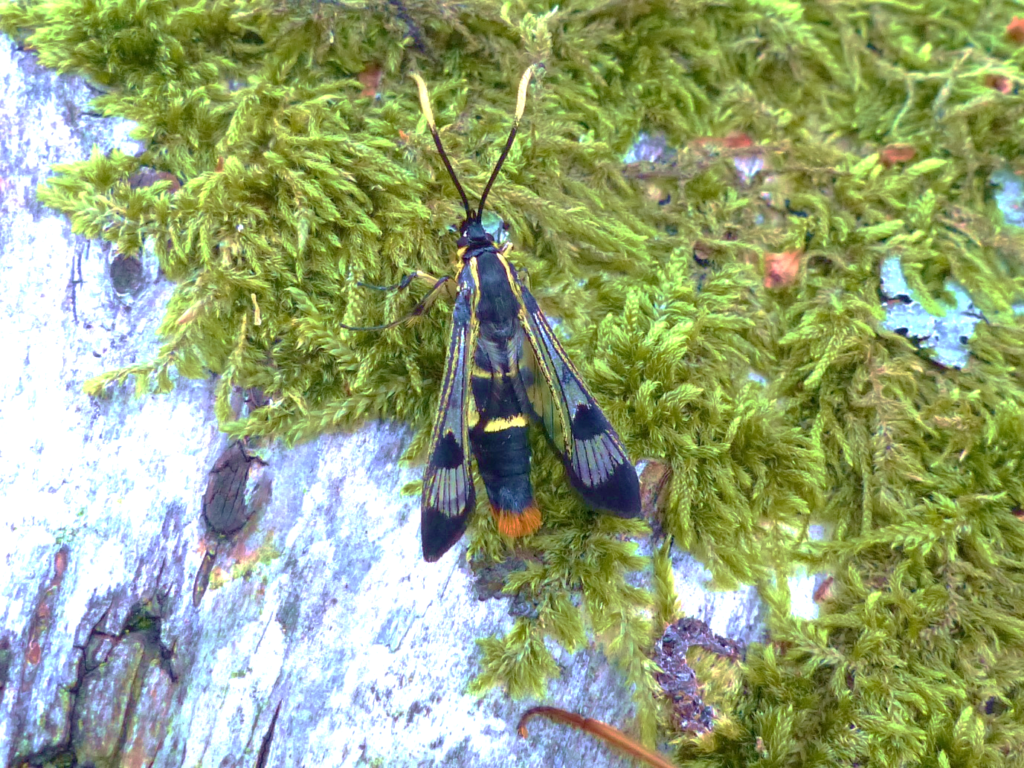
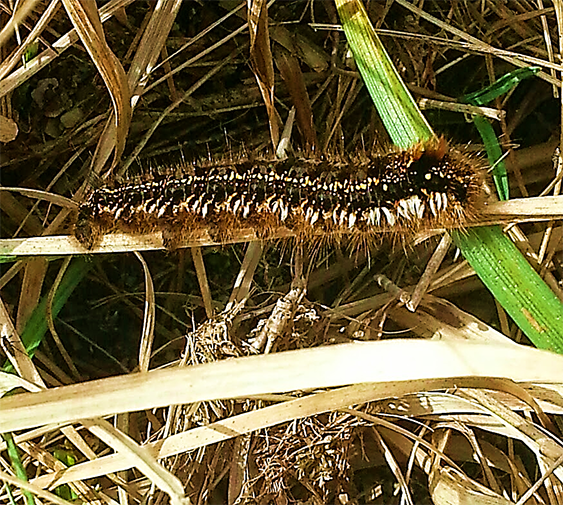
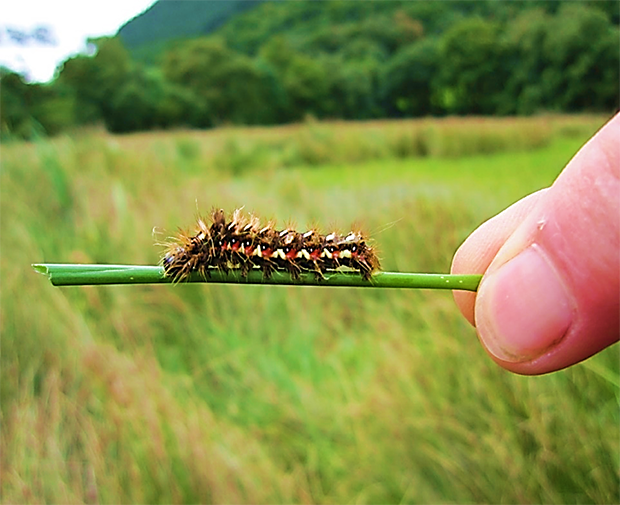
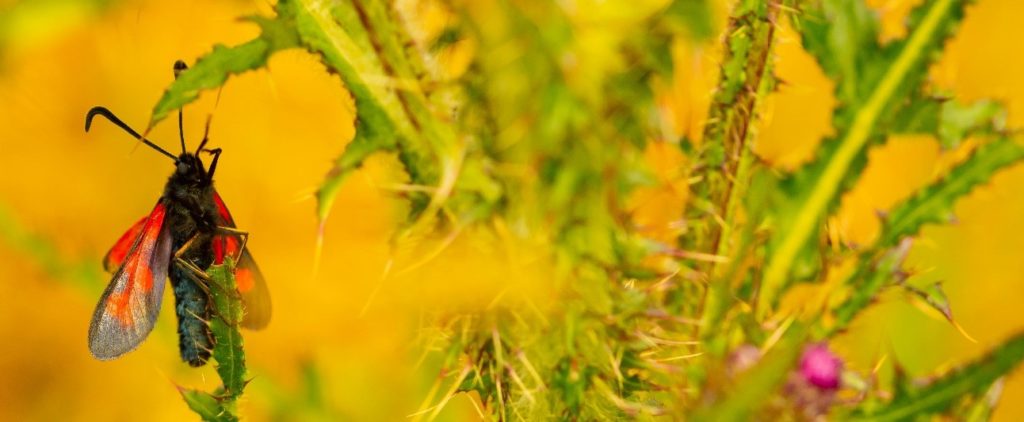
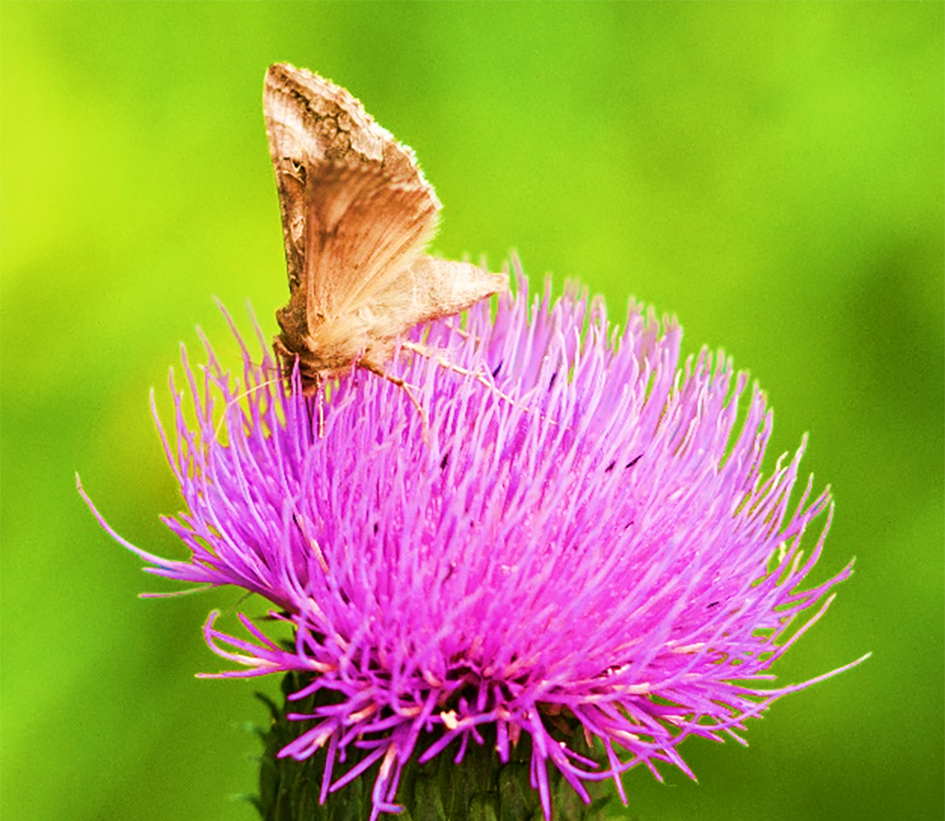
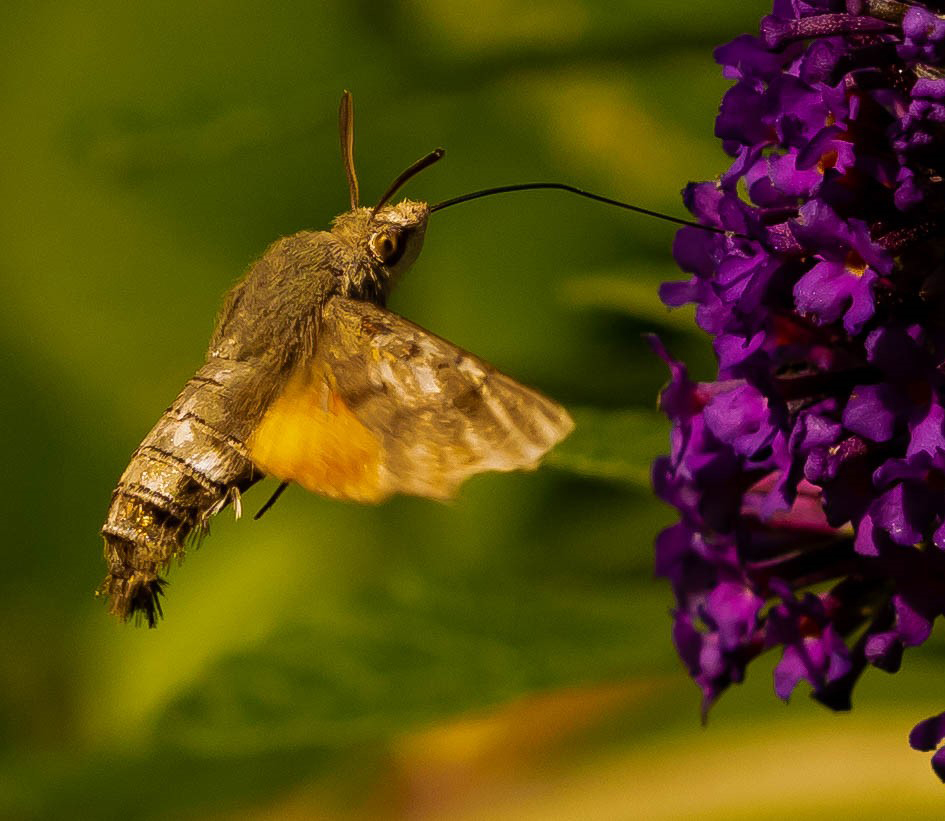
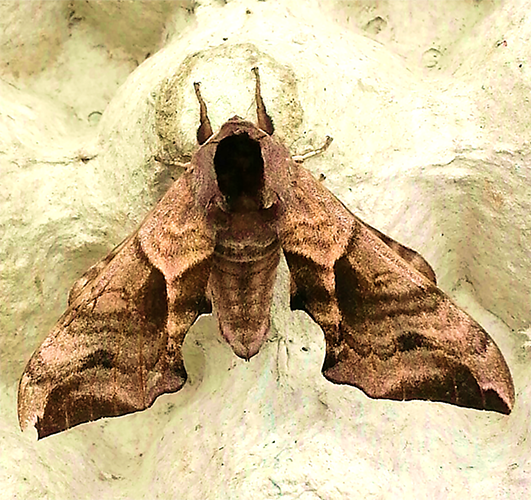
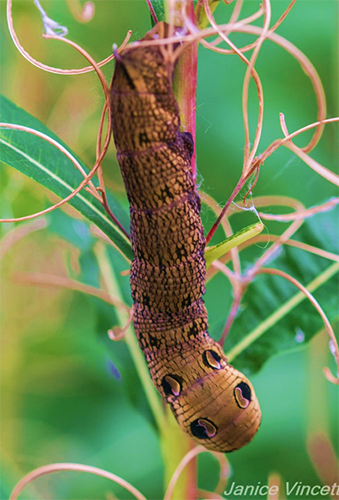
To date, 549 species of moth that have been recorded on the Estate. Many of these are night time flying species, although some species will be on the wing in the day time as well.
As the night time flying moths will come to a specialist light trap, they can be recorded quite easily by carefully removing them the following day to examine.
In 2011, there was an exciting discovery in a local Nature Reserve of the nationally rare and Red Data Book species the Welsh Clearwing moth. Following on from this, the Countryside Ranger, Sorcha Lewis carried out a systematic search of the older specimens of Downy Birch trees on the Estate and the exuviae of the moth was found protruding from some of these trees, proving its presence here as well.
Other rarities that have been recorded on the Estate include Pretty Pinion, Orange Underwing and Fen Square-Spot.